


Tesla Autopilot Explained: How It Works and Benefits
Did you know over 90% of traffic accidents are caused by human error? Modern technology could make our roads safer. That’s why I’m excited about tesla autopilot explained. It’s designed to make your daily drive smoother and less stressful.
This feature works at Level 2 automation. It handles steering, acceleration, and braking. But, you must stay alert and keep your hands on the wheel always.
I want to help you understand how this innovation works and its benefits. It uses cameras and sensors to create a safer driving environment for all. Let’s explore how this technology changes our travel.
Key Takeaways
- The system functions as a sophisticated driver-assistance tool, not a self-driving replacement.
- It currently operates at Level 2 automation, which requires constant human supervision.
- Safety is enhanced through advanced sensor arrays that monitor surroundings in real-time.
- Drivers must remain fully engaged to intervene whenever the situation requires manual control.
- Understanding these limitations is essential for maximizing the convenience of the platform.
What is Tesla Autopilot?
When I first learned about it, I saw how tesla autopilot explained is key for today’s drivers. It’s a set of advanced features that has grown a lot from its start in 2014. It aims to make driving safer and easier.
Overview of Tesla Autopilot Features
The system helps with the toughest parts of driving. It controls speed and steering to keep the car in its lane and safe from others. It uses many cameras and sensors for a smooth ride.
“The future of transportation is not just about moving from point A to point B, but about how safely and efficiently we can get there.”
Levels of Automation
This tech is called Level 2 automation. It means the driver must stay alert and ready to take over. It’s not fully self-driving.
- Level 0: No automation.
- Level 1: Driver assistance for speed or steering.
- Level 2: Combined assistance for speed and steering.
- Level 5: Full automation under all conditions.
Comparison to Traditional Cruise Control
Many think it’s like old cruise control, but it’s much more. It watches the road and changes speed and steering. This makes driving more dynamic and fun.
How Does Tesla Autopilot Work?
I often wonder about the engineering behind how does Tesla autopilot work on today’s roads. The system has changed a lot, moving from old radar tech to a new, camera-based system. This change lets the car see like we do, using high-resolution cameras.
Sensor and Camera Technology
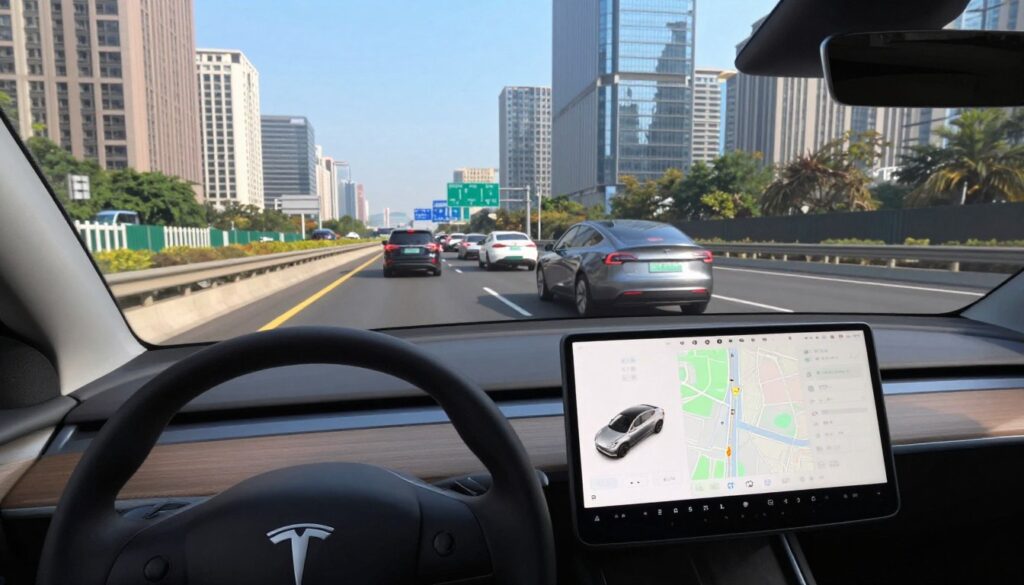
The system uses cameras all around the car for a full view. These cameras take pictures in real-time, spotting lanes, signals, and obstacles. This way, the car maps out its surroundings.
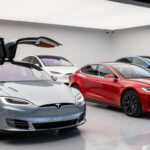
If you want to check out the latest Tesla models, you can find your perfect electric car. The car’s cameras work well in any light, showing how far car tech has come.
Data Processing and Machine Learning
The car’s computer is its brain, quickly sorting through lots of visual data. tesla autopilot technology is amazing here, making fast decisions with neural networks. It gets smarter with every mile, thanks to data from all Tesla cars.
This learning process makes the car better over time, with updates sent directly to it. It’s reassuring to know my car is getting smarter and safer. The mix of hardware and software makes driving smooth and adaptable.
Communication with the Driver
Keeping me safe is key, so the system talks to me while it’s on. It checks if I’m paying attention by watching the steering wheel. If I’m not, it alerts me with lights and sounds.
| Component | Primary Function | Data Type |
|---|---|---|
| Forward Cameras | Long-range obstacle detection | Visual/Depth |
| Side Cameras | Blind spot monitoring | Visual |
| Onboard Computer | Real-time decision making | Neural Network |
| Steering Sensor | Driver attentiveness check | Torque/Input |
Knowing how does Tesla autopilot work shows the importance of balance. It makes driving safer and more relaxed. But, I’m always in charge, making sure every trip is safe and efficient.
Key Features of Tesla Autopilot
The true power of my vehicle lies in its advanced automated driving tools. These tesla autopilot features handle driving tasks, keeping me alert and relaxed on long trips. You can check the latest electric car models to see which support these systems.
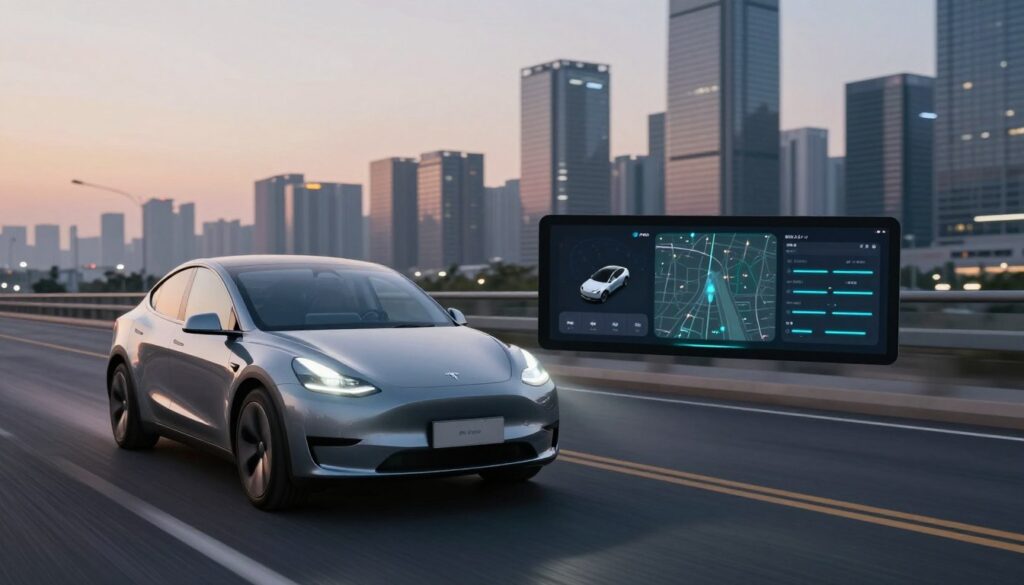
To understand how does tesla autopilot work, we must look at its components. Each feature has a unique role, working together for a smooth driving experience.
Traffic-Aware Cruise Control
This feature keeps a set speed while adjusting to traffic flow. It uses sensors to monitor the distance to the car in front. It is truly impressive how smoothly it slows down or accelerates.
“The best technology is that which disappears into the background, leaving you to enjoy the journey.”
Autosteer Functionality
Autosteer takes over when cruise control is active, keeping the car in its lane. It uses cameras to detect lane markings and road boundaries. This is great for long highway drives where focus can be hard.
Navigate on Autopilot
This feature handles complex highway maneuvers. It suggests lane changes, navigates interchanges, and takes exits with minimal input. It shows how how does tesla autopilot work to ease long-distance travel.
These tesla autopilot features work together for safety and comfort. I feel confident knowing these tools support my driving decisions.
Benefits of Using Tesla Autopilot
The tesla autopilot benefits have greatly improved my daily commute. It brings advanced software into my driving, making each trip more controlled and predictable.

Increased Safety Measures
This technology offers a proactive approach to road safety. It reduces risks from common human mistakes, like drifting out of lane or slow reactions during sudden stops.
The system acts as a vigilant co-pilot, always watching the road. It adds a layer of protection, significantly reducing the chance of accidents due to brief distractions.
Reduced Driver Fatigue
Long drives can be tiring, but Tesla Autopilot changes that. It handles tasks like keeping speed and staying in lane, keeping me alert for longer.
This makes long trips much easier. I feel more refreshed when I arrive, unlike after driving through heavy traffic for hours myself.
Fuel Efficiency and Environmental Impact
The software also promotes smarter driving habits that help the environment. It controls acceleration and braking precisely, avoiding the sudden stops humans often make.
This leads to optimized energy consumption for my car. It keeps speeds steady and brakes less, extending my range and reducing my environmental impact.
Limitations of Tesla Autopilot
Tesla Autopilot has its limits, and drivers must know them for safety. It’s key to understand these limits to stay safe on the road. The tech is great, but it can’t replace a driver’s attention.
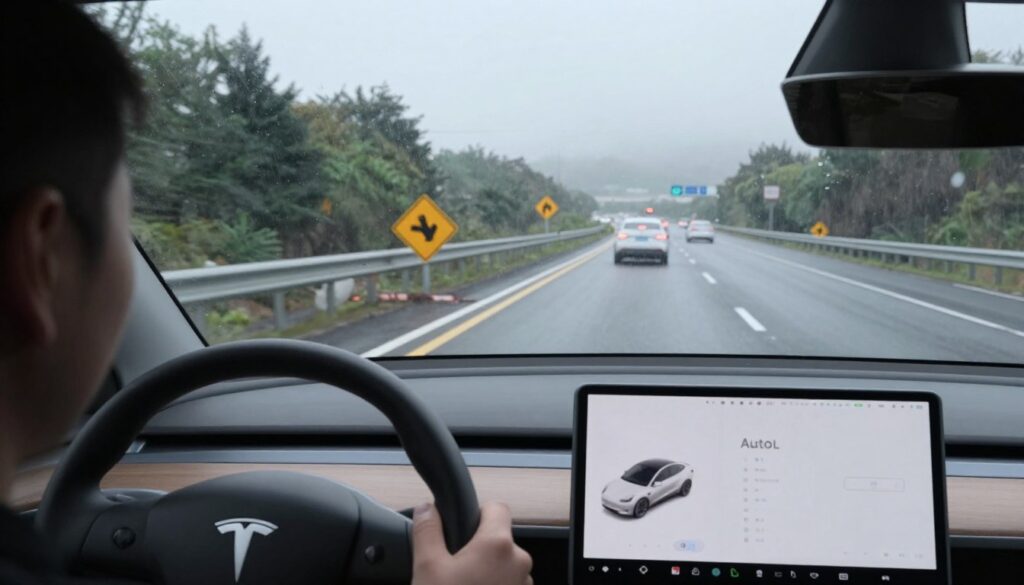
Not Fully Autonomous
Many think Tesla cars can drive by themselves. But, the truth is, they’re only Level 2 driver-assistance systems. Drivers must stay alert and ready to take control.
The system helps with steering, braking, and speeding up. Yet, it can’t make decisions like a human. It’s risky to think the car can handle everything without you. Always see it as a helpful tool, not a full driver.
Weather Sensitivity
Weather affects how well Autopilot works. Rain, fog, or snow can make it hard for the car to see. This can lead to poor performance or the system turning off.
In bad weather, it’s best to turn off Autopilot. Blindly trusting the tech in harsh conditions is dangerous. Always check the road yourself, even if the car says it can handle it.
Legal and Regulatory Concerns
Government agencies are looking into Tesla’s Autopilot. They worry that “Autopilot” might make people think the car is more advanced than it is. This has led to investigations and calls for clearer info.
As a user, I keep up with these changes. It helps me use the tech right and follow legal safety standards.
| Feature Category | System Capability | Driver Responsibility |
|---|---|---|
| Steering Control | Active Assistance | Constant Supervision |
| Obstacle Detection | Sensor-Based | Manual Verification |
| Weather Handling | Limited/Reduced | Full Discretion |
| Legal Status | Driver-Assist | Full Liability |
My Experience with Tesla Autopilot
My journey with Tesla Autopilot started with curiosity and doubt. I wondered if a machine could handle real-world traffic. Writing this tesla autopilot review helped me see how my views changed from skepticism to appreciation.
First Impressions on the Road
At first, I kept my hands on the wheel and eyes on the road. I learned when to let the system take over and when I needed to step in. It’s clear that Autopilot is a driver-assist tool, not a replacement for human attention.
Confidence in Autopilot’s Capabilities
As I used it more, I grew to trust the system. I saw how it keeps its lane with precision. It also handled speed changes well, boosting my confidence.
“The true value of automation lies in its ability to reduce the cognitive load of the driver during monotonous tasks, allowing for a more relaxed journey.”
Situations Where I Found It Most Helpful
Autopilot was most helpful in heavy traffic. It made long drives less tiring. The table below shows how it changed my driving experience.
| Driving Scenario | Manual Effort | Autopilot Assistance |
|---|---|---|
| Heavy Highway Traffic | High Stress | Low Stress |
| Open Highway Cruising | Moderate Effort | Minimal Effort |
| Complex City Streets | High Alertness | Not Recommended |
The tesla autopilot benefits shine on long, predictable roads. While cautious, this tesla autopilot review shows it’s a great tool for long trips. It has changed how I travel long distances.
The Future of Tesla Autopilot
I see a bright future for car technology, with constant updates and improvements. The tesla autopilot technology is getting smarter, moving from just helping the driver to doing more on its own. We’re just starting to see what these cars can do.
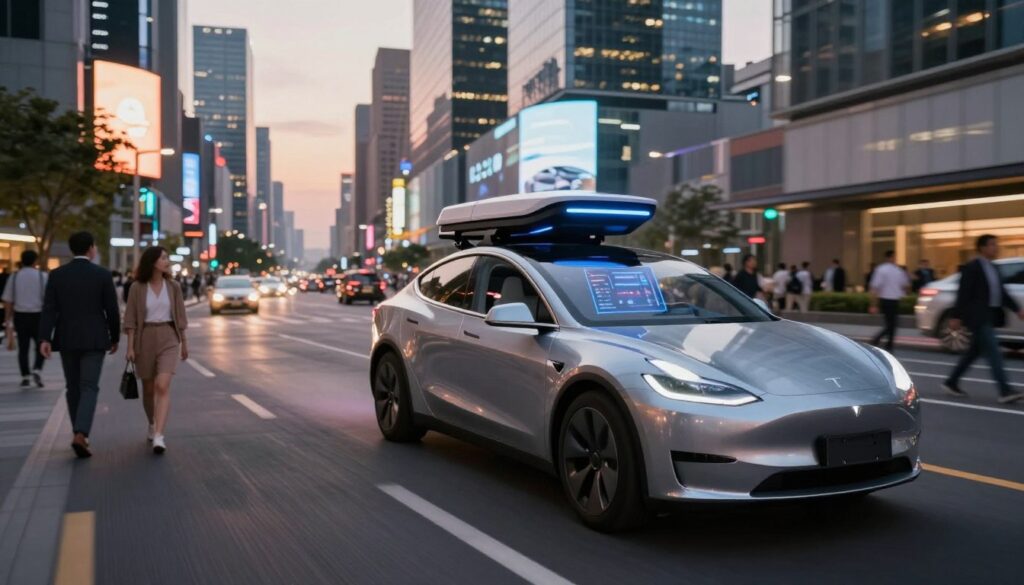
Upcoming Updates and Features
Modern cars get better with over-the-air updates, no need to visit the service center. Future updates will include faster computers, making the car smarter and easier to use.
Tesla’s Vision for Full Self-Driving
Tesla wants to make cars that drive themselves completely. They’re using lots of data to teach their cars to handle tough traffic situations. This tesla autopilot technology will make driving in cities easier and safer.
Industry Trends in Autonomous Driving
The car world is moving towards more self-driving cars, with many companies racing to be first. This brand is working on a system that can drive anywhere, not just on certain routes. Here’s what we can expect in the next few years.
| Development Phase | Primary Focus | Expected Outcome |
|---|---|---|
| Short-Term | Software Refinement | Enhanced lane stability |
| Mid-Term | Hardware Upgrades | Improved sensor precision |
| Long-Term | Full Autonomy | Hands-free navigation |
The use of tesla autopilot technology in our daily lives is a big change. I’m hopeful that these updates will keep us safe and make traveling easier for everyone.
Comparing Tesla Autopilot with Competitors
When I do a tesla autopilot review, I look at other car makers’ efforts in self-driving tech. Many aim for the same goal but take different paths. This shows why Tesla’s vision-based system is unique in today’s cars.
Ford BlueCruise
Ford’s BlueCruise lets you drive hands-free on highways. Unlike Tesla, it uses a camera to check if you’re watching the road. It works well on mapped highways, making long trips smoother.
GM Super Cruise
General Motors’ Super Cruise is known for its accuracy on mapped roads. It uses LiDAR maps to stay in its lane. It feels stable, but only works on roads scanned by GM.
Waymo and Other Autonomous Solutions
Waymo focuses on self-driving taxis. Their cars have many sensors, including LiDAR, for city driving. These systems are impressive but are not for personal use.
The table below shows how these big players differ in their approaches.
| System | Primary Sensor Tech | Operational Scope | Driver Requirement |
|---|---|---|---|
| Tesla Autopilot | Camera-based Vision | General Roadways | Active Supervision |
| Ford BlueCruise | Cameras & Radar | Mapped Highways | Active Supervision |
| GM Super Cruise | LiDAR & Cameras | Mapped Highways | Active Supervision |
| Waymo | LiDAR, Radar, Cameras | Geofenced Areas | None (Fully Autonomous) |
Choosing between these systems depends on your driving needs. Tesla’s tech works on many roads. Others focus on specific areas for better performance.
Tesla Autopilot and Ethical Considerations
Exploring self-driving cars, I see the moral side is as key as the tech. The fast growth of tesla autopilot technology makes us rethink who’s to blame on the road. It’s not just about how a car works, but the ethics behind it.
Responsibility in Case of Accidents
Liability in system failures is a big question. Drivers are always in charge, but autonomous decision-making makes things unclear. When accidents happen, figuring out who’s at fault is tough for regulators.
Studies, like those in advanced autonomous system research, show we need clear laws. Without them, users might not know their role in supervised driving. It’s vital to be open about how these systems work for safety and legal reasons.
The Role of Artificial Intelligence
Artificial intelligence is the heart of modern driving systems. It uses complex algorithms to understand the road and react to dangers. But, its logic can be hard for drivers to grasp.
I often think about how these systems decide in emergency situations. The ethics of AI programming are tough. It reflects the values of the engineers and the companies, a big responsibility.
Public Perception and Trust Issues
Public trust is delicate and can be shaken by media reports of accidents. Even though the fleet drives safely millions of miles, one big incident can get all the attention. New software features are often introduced before the public fully understands their limits.
To build trust, we need clear communication and proven reliability. As users, we should be excited about new tech but also realistic about its capabilities. The table below shows the main ethical hurdles the industry faces.
| Ethical Challenge | Primary Concern | Impact on User |
|---|---|---|
| Liability | Determining fault | Legal uncertainty |
| AI Logic | Decision transparency | Reduced predictability |
| Public Trust | Media influence | Adoption hesitation |
| Safety Oversight | Human intervention | Increased vigilance |
Frequently Asked Questions About Tesla Autopilot
I often get questions from readers about their car’s limits. When reading a tesla autopilot review, it’s easy to get caught up in the tech. But knowing the real limits is key for every owner.
How Does It Handle Complex Intersections?
The system is made for driving on highways and well-marked roads. It can handle lane changes but isn’t for complex city intersections or traffic circles. Always keep an eye on the road.
Stay fully attentive at all times. Using the system in busy city areas can cause unexpected actions. It’s made for smooth traffic, not busy city streets.
Can I Use It in All States?
You can use the system on most roads in the U.S. But, check local laws on Tesla Autopilot use. This ensures you follow state rules.
Weather also affects how well it works. Heavy rain, snow, or glare can mess with the cameras. This makes the system less reliable in some areas.
What Happens if I Don’t Intervene?
Safety is the main goal for the maker. If you ignore warnings, the system will get louder. It will try to get your attention.
If you don’t respond, the car will shut down. It will slow down and stop with hazard lights on. This is to avoid accidents.
| Scenario | System Response | Driver Requirement |
|---|---|---|
| Minor Lane Deviation | Visual/Audio Alert | Apply steering torque |
| Persistent Inattention | Increased Warning Intensity | Immediate manual control |
| Emergency Shutdown | Automatic Braking | Full takeover required |
How to Get Started with Tesla Autopilot
I remember the first time I used the advanced driving features in my car. I want to help you do the same safely. Learning about how does tesla autopilot work is key to a smoother drive on highways.
Vehicle Requirements
Before using automated systems, check your car’s hardware. Most Teslas have the needed cameras and sensors. But, older cars might need upgrades. Always check your car’s software version on the touchscreen.
Make sure your Tesla account is active. Without the right software, tesla autopilot features won’t work. Check your owner’s manual for the exact hardware in your car.
Activating Autopilot Features
Activating Autopilot is easy. Just pull the gear selector stalk down while driving steady. A blue steering wheel icon will show on your screen, meaning Autopilot is on.
Keep your hands on the wheel at all times. The system checks if you’re paying attention. Watching the screen shows how Autopilot sees the road and traffic.
Tips for New Users
Start in quiet areas to get used to Autopilot. It’s best to practice on a quiet highway. Always be ready to take control if needed.
Here’s what new users should know:
| Requirement | Action Needed | Safety Priority |
|---|---|---|
| Software Version | Check for updates | High |
| Hardware Check | Verify sensor suite | Medium |
| Driver Attention | Keep hands on wheel | Critical |
| Environment | Use on marked roads | High |
Always be cautious, even with Autopilot. Reading your owner’s manual helps you know what your car can do. Stay alert and enjoy the tech while keeping control.
Conclusion: The Evolution of Driving with Tesla Autopilot
My journey into vehicle automation shows a world that changes every day. Learning about tesla autopilot explained makes me see how far we’ve come. I believe these tools will soon be a must-have for all drivers.
Reflecting on the Driving Experience
The real value of this tech is the mix of machine help and human watchfulness. The current tesla autopilot features are impressive, but my attention is key to safety. This mix of human and software is changing how we travel today.
Looking Toward the Horizon
The future of tesla autopilot goes beyond just making driving easier. I think it will change how we design cities and manage traffic. Keeping up with updates helps me join a safer, more efficient driving future.
A Call to Continued Discovery
I urge you to keep learning about your car’s new features. The journey to full autonomy is tough, but we’re making progress. I’m excited to see how these changes will shape the next generation of drivers.
FAQ
How does Tesla Autopilot handle complex urban intersections?
Tesla Autopilot is mainly for highways and can struggle with city intersections. Full Self-Driving (Supervised) is better for these areas. But, I always stay alert. The system uses cameras to see traffic lights and signs, but I need to watch it closely.
Can I use Tesla Autopilot in all states across the U.S.?
Yes, I can use Tesla Autopilot everywhere in the U.S. It’s a Level 2 system, not fully self-driving. I must follow traffic laws and keep my hands on the wheel. Each state has its own rules, so I always check the owner’s manual.
What happens if I don’t intervene when the system alerts me?
If I ignore the alerts, the system will warn me more and more. If I don’t listen, it will stop the car and turn on the hazard lights. Tesla also has a “strike” system for not using Autopilot correctly.
Can you provide a brief Tesla Autopilot review based on your daily commute?
I love Tesla Autopilot for my daily drive. It makes long commutes easier by handling stop-and-go traffic. It’s not perfect, but it makes my morning drive much better.
Exactly how does Tesla Autopilot work without using lidar?
Tesla Autopilot uses cameras instead of lidar. It has eight cameras for a 360-degree view. The onboard computer uses this data to understand the world around it, like a human.
What is the core Tesla Autopilot technology that sets it apart from competitors?
Tesla Autopilot is unique because it learns from a huge fleet of cars. It uses data from all these vehicles to get better over time. This is different from systems that rely on pre-mapped data.
What are the primary Tesla Autopilot features included in the base package?
The basic package includes Traffic-Aware Cruise Control and Autosteer. These features help the car stay in its lane and match traffic speed. More advanced features are in the Enhanced Autopilot or Full Self-Driving packages.
What are the most significant Tesla Autopilot benefits for long-distance travel?
The biggest benefits are less driver fatigue and more safety. It handles the small adjustments needed to stay safe. This makes long drives smoother and safer.
How is Tesla Autopilot explained in terms of its automation level?
Tesla Autopilot is a Level 2 system. It can steer and accelerate at the same time, but I’m always in charge. It’s a tool to help me drive, not replace me.

Hi! I’m Moheen Iftikhar, founder of CarPulsei. Passionate about cars, innovation, and the future of mobility, I create content that keeps automotive enthusiasts informed. From expert reviews and industry trends to driving tips and practical insights — my goal is to help you navigate the automotive world with confidence.