



BMW Used Cars Buying Guide: How to Buy with Confidence
Did you know luxury cars often lose nearly 50% of their value in the first three years? This big drop in value is a great chance for smart buyers to get high-performance cars at a lower price.
This bmw used cars buying guide is your personal guide through the complex car market. Finding the right used luxury car takes precision and patience.
By following these steps, you make sure your investment is good and rewarding. I aim to help you find a reliable car that gives you the driving experience you want.
Key Takeaways
- Understand the significant financial benefits of choosing pre-owned luxury models.
- Learn to navigate the complex American market with a structured approach.
- Identify the essential steps to verify vehicle history and mechanical integrity.
- Gain confidence in your negotiation strategy for premium automotive assets.
- Ensure your long-term investment remains both reliable and enjoyable.
Understanding the BMW Brand
My search for the perfect car starts with learning about BMW’s values. A bmw used cars buying guide shows me how the brand’s history is key. This history shapes the driving experience of every model.
A Brief History of BMW
BMW, or Bayerische Motoren Werke, began making aircraft engines in the early 1900s. This background in aviation taught them about precision and efficiency. These values are at the heart of BMW today.
The company then moved to making motorcycles and cars that changed luxury travel. By looking at BMW’s growth, I see why their older cars are so sought after.
The Reputation for Quality and Performance
BMW’s fame comes from constant innovation and top-notch engineering. I look for cars that mix comfort with power. You can explore the best BMW M series cars in the USA to see their sporty side.
The “M” in BMW M means BMW Motorsport, the top of their performance. These cars are for drivers who want more from their drive. Key reasons for their great reputation include:
- Advanced Powertrain Technology: Smooth, responsive power.
- Driver-Centric Cockpits: Designs that put the driver first.
- Rigorous Testing Standards: Long-term reliability in older cars.
- Innovative Chassis Dynamics: Balanced and agile handling.
With a good bmw used cars buying guide, I can trust my choices. Focusing on quality means my car will bring joy for years. Knowing the brand is key to a good buy.
Why Buy a Used BMW?
Exploring the used car market opens doors to high-end driving without the high cost. You can find great deals on BMW car models that offer top-notch performance. By following tips for buying bmw used cars, you can find a reliable car that suits your lifestyle.

Cost Efficiency Compared to New Models
Buying a used car saves you a lot of money. You can get a higher trim level for the same price as a basic economy car. This financial flexibility lets you spend on maintenance or upgrades, not just the initial cost.
Depreciation Benefits
New cars lose a lot of value quickly. Buying used means you avoid this steep drop. This makes your investment more stable, a key tip for buying bmw used cars for long-term value.
Access to Premium Features
Used models often come with luxury features that are hard to afford new. You can get advanced driver-assistance systems, premium leather, and top-notch sound systems at a lower cost. This way, you enjoy luxury without the high price of the latest model.
| Feature | New BMW | Used BMW |
|---|---|---|
| Initial Cost | High | Affordable |
| Depreciation | Rapid | Gradual |
| Luxury Tech | Standard | Accessible |
| Value Retention | Lower | Higher |
Setting a Budget for My Purchase
Buying a secondhand BMW is more than just looking at the price. I need to think about the total cost of owning it. Proper planning helps me enjoy the luxury without hurting my finances.

Determining My Financing Options
I look at different ways to pay for my car. Options include bank loans, credit union financing, or dealer plans. I compare rates and terms to find the best deal for my budget.
Getting pre-approved from a credit union can help me negotiate better. It shows me how much I can spend. I also check the total interest to avoid extra costs.
Estimating Ownership Costs
The initial price is just the start. I also think about ongoing costs like fuel, oil changes, and tire rotations. These keep my BMW running smoothly.
I save for unexpected repairs too. Luxury cars can have higher repair costs. Planning ahead helps avoid surprises.
Considering Insurance Rates
Insurance for luxury cars is often different. I talk to my insurance company early to get a good quote. My driving history and the car’s safety features affect the cost.
Here’s a table of estimated monthly costs for a secondhand BMW:
| Expense Category | Estimated Monthly Cost | Frequency |
|---|---|---|
| Loan Payment | $400 – $700 | Monthly |
| Insurance Premium | $150 – $300 | Monthly |
| Routine Maintenance | $100 – $200 | Monthly Average |
| Fuel Costs | $150 – $250 | Monthly |
Researching BMW Models
When I search for the best bmw used cars, I weigh my needs against the brand’s reliability. I explore different series to avoid mistakes and find the perfect car for me.

Popular Models to Consider
The BMW 3 Series is a favorite for its perfect balance of performance and daily use. For more space, the X3 and X5 SUVs are great for families or outdoor lovers. The 5 Series sedan offers a refined ride and premium interior.
Understanding Model-Specific Features
Each model has its own unique features. I check if a trim has advanced safety systems or better infotainment. It’s also smart to look at the BMW maintenance cost guide for 2026 to plan for long-term costs.
Checking for Recalls and Common Issues
I always check the vehicle’s history for recalls before buying. Manufacturers update models to fix safety or performance issues. Knowing about common problems helps me prepare for any future repairs.
| Model Series | Primary Strength | Best Use Case |
|---|---|---|
| 3 Series | Agility | Daily Commuting |
| 5 Series | Comfort | Long-Distance Travel |
| X3 | Versatility | Small Families |
| X5 | Power/Space | Active Lifestyles |
Where to Buy Used BMWs
Looking for the perfect vehicle starts with finding reliable sources. It’s key to choose the right place to buy bmw pre-owned vehicles. I look for places with clear history and professional support.

Authorized Dealerships vs. Private Sellers
Authorized dealerships are more trustworthy than private sellers. Buying from a dealer means getting cars that have been checked thoroughly. This makes me feel confident that the car meets high standards.
Private sellers might offer lower prices, but I need to do my homework. I check service records and title status when buying from an individual.
Online Platforms for Buying Used Cars
Today, it’s easy to look at bmw pre-owned vehicles online. Websites let me filter by many criteria. This helps me compare prices easily.
Online marketplaces help me understand market trends. They often include history reports, which make checking easier. But, I always see the car in person before buying.
Local Auctions and Car Fairs
Local auctions and car fairs can be great for finding deals. They offer unique cars that might not be on regular lots. I look for exceptional value here, but I need to be quick.
Going to these events means being prepared and knowing cars well. Auction cars are sold “as-is,” so I inspect them carefully. Buying bmw pre-owned vehicles here is for those who like a hands-on approach.
Evaluating Vehicle History
When I look at the things to consider when buying a used BMW, the vehicle history report is key. It shows the car’s past in a way a visual check can’t. Skipping this step could lead to hidden problems.
Importance of CARFAX Reports
A CARFAX report is my go-to for real data on a car. It shows the car’s history, including past owners, accidents, and mileage. Consistency is key; big jumps in mileage are a warning.
“A vehicle history report is the single most effective way to identify possible red flags before you buy.”
Understanding Title Status and Damage History
I always check the title to make sure the car is legal. A “salvage” or “rebuilt” title means it was once totaled. I also watch for signs of environmental damage, like:
- Flood damage: Often hidden in electrical parts or upholstery.
- Frame damage: Means a big crash that could affect safety.
- Odometer rollbacks: A sign of fraud or tampering.
Service Records and Maintenance Checks
I also check the service history to see if the car was well-maintained. BMWs need consistent, high-quality maintenance to run well. A good service history makes me trust the car more.
If there’s no service log, it’s a big risk. A well-kept BMW should have clear records of its care.
Inspecting the Car Before Purchase
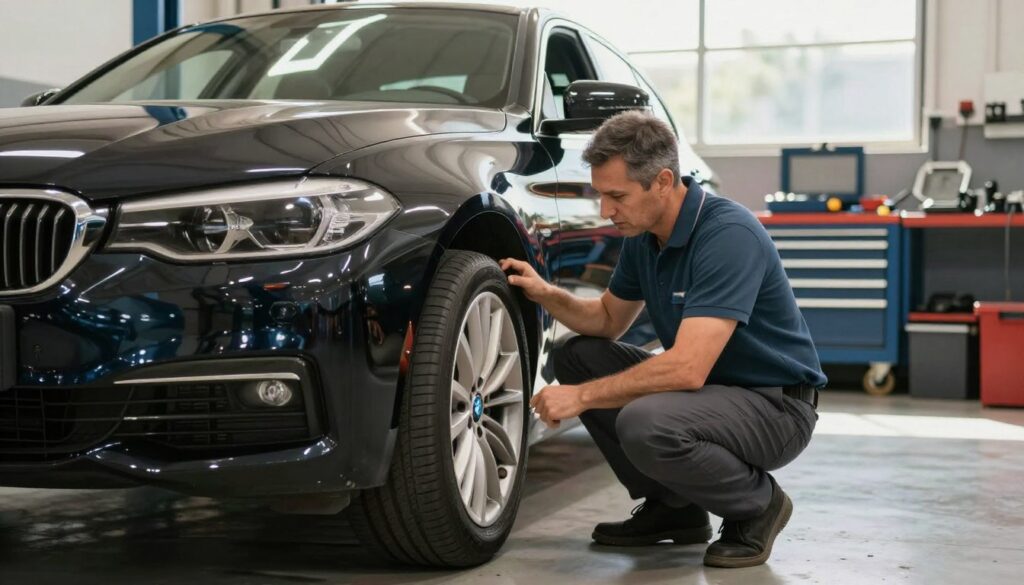
When I look at pre-owned luxury cars, a hands-on evaluation is key. History reports are helpful, but nothing beats a personal inspection. These tips for buying bmw used cars help spot issues that might be missed.
What to Look for During a Test Drive
During the test drive, I check how the car responds to my actions. I focus on the acceleration to see if it’s smooth. I also test the handling on different roads to find any issues.
“The true character of a vehicle is revealed only when you put it through its paces on the open road.”
I test the brakes by pressing them hard to see if they work right. Any unusual noises or slow shifting are big red flags. For more tips, I often look at what to look for when buying a used car.
Key Areas to Inspect Under the Hood
After the engine cools, I check the hood for signs of neglect. I look for fluid leaks, which could mean expensive repairs later. I also check the belts and hoses for damage.
- Check oil color and consistency on the dipstick.
- Inspect the coolant reservoir for signs of contamination.
- Look for corrosion around the battery terminals.
Signs of Wear and Tear to Notice
I look for mismatched paint or uneven gaps on the exterior, which might mean past damage. I also check the tires for wear and test all the car’s features inside.
By paying attention to these details, I can avoid surprises and feel confident in my purchase.
Utilizing a Trusted Mechanic
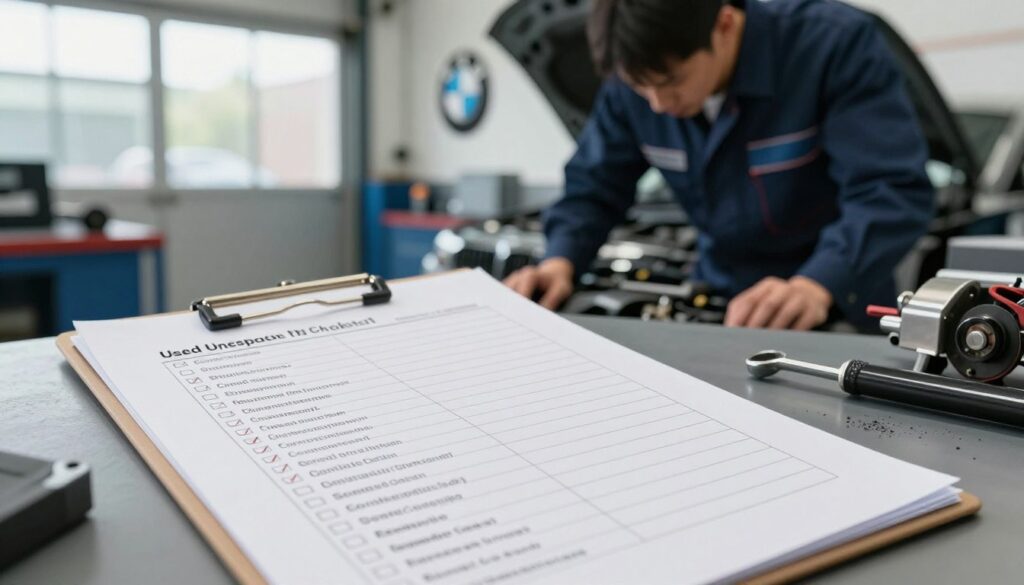
Getting a professional mechanic involved is the best way to protect my investment. Even if a car looks perfect, there could be hidden problems. A detailed bmw used car inspection checklist is key to avoiding costly surprises.
Importance of a Pre-Purchase Inspection
A professional inspection is my last line of defense before buying. It gives a true picture of the car’s condition, which is critical for complex German cars. By following the steps on how to purchase a pre-owned BMW, I can feel confident in my decision.
What My Mechanic Should Check
My mechanic should thoroughly check the car’s mechanical health. They should look at the engine, check for oil leaks, and ensure the cooling system works well. A detailed bmw used car inspection checklist also includes checking the suspension, brakes, and electronic systems.
It is essential that they also check the undercarriage for rust or damage. They should make sure all safety features work and the software is current. This thorough check helps me avoid cars that have been poorly cared for.
Understanding Their Recommendations
After the inspection, I need to go over the report with my mechanic. They will outline what needs fixing now and what can wait. I use this bmw used car inspection checklist to see if the price is right or if I should negotiate.
If the report shows big problems or failing parts, I should think twice. Making an informed decision is better than rushing into a bad purchase. My aim is to buy a car that’s reliable and fun to drive for years.
Negotiating the Price
To negotiate the price for a used BMW well, you need to be prepared, confident, and know the market. First, find out the car’s true value. This way, you won’t pay too much for a high-quality vehicle.
Establishing My Target Price
I start by researching the car’s market value. I look at online listings to see what similar cars are selling for. This helps me set a fair offer.
I also consider the car’s mileage, condition, and special features. Having a “walk-away” price in mind keeps me from overspending. It helps me stay focused and avoid emotional decisions.
Tactics for Successful Negotiation
When I start negotiating the price for a used BMW, I use my pre-purchase inspection findings. If the mechanic found repairs or maintenance needed, I share this with the seller. This shows the seller why I’m asking for a lower price.
- Compare listings: Show the seller that similar cars are priced lower.
- Highlight defects: Use inspection reports to ask for a price cut for needed repairs.
- Stay calm: Keep a polite but firm tone during the negotiation.
When to Walk Away
It’s sometimes best to walk away. If the seller won’t address mechanical issues or wants too much money, it’s time to leave. Keeping my financial interests safe is more important than getting a car.
| Scenario | Action | Result |
|---|---|---|
| Seller ignores inspection findings | Walk away | Avoid future repair costs |
| Price is above market value | Counter-offer | Fair market deal |
| Hidden title issues | Walk away | Safety and security |
There are many cars out there. I never rush into a deal that doesn’t feel right. By being patient, I make sure I’m negotiating the price for a used BMW in a way that’s good for my finances.
Understanding Warranties and Guarantees
When you look into how to buy a certified pre-owned BMW, you’re choosing a path with less risk. A luxury car is a big investment. The right protection makes sure your drive is fun, not stressful. Always check the coverage options before you buy.
Difference Between CPO and Basic Warranties
A Certified Pre-Owned (CPO) program is different from buying a used car. These cars get a 360-degree inspection by factory-trained techs. They meet high quality standards. The manufacturer backs these cars with a warranty that’s like a new car’s.
On the other hand, a basic used car has no warranty or a short powertrain warranty. Learning how to buy a certified pre-owned BMW means you get this extra security. This peace of mind is often worth the extra cost of certified models.
Evaluating Third-Party Warranty Options
If you pick a non-certified car, think about a third-party warranty. These plans come from independent companies and can vary a lot. Make sure to read the contract well to see if the provider is reliable.
Compare the cost of the third-party plan to the repair costs of your car. These plans can let you choose your own repair shop, which is a big plus. But, check if the company is okay to work with luxury European brands.
What’s Covered and What’s Not
Most warranties, CPO or third-party, cover big parts like the engine and transmission. But, they don’t cover wear and tear items like brake pads and tires. It’s important to know what’s not covered.
Before you sign, ask for a list of what’s not included. Transparency is key when protecting your investment. Knowing what’s covered helps you plan for maintenance and keeps your car in top shape.
Completing the Purchase
Finalizing your purchase is the most critical step in this bmw used cars buying guide. Finding your ideal vehicle is exciting. But, focus on the legal and financial details for a smooth transition. Always take your time to review every document before signing.
Essential Paperwork to Finalize the Deal
The foundation of a secure transaction lies in the bill of sale. This document must clearly state the purchase price, the vehicle identification number (VIN), and the odometer reading at the time of sale. Both the buyer and the seller should sign this document to validate the agreement.
Also, ensure you receive a copy of the odometer disclosure statement if it is not included in the bill of sale. Keeping these records organized is vital for your personal files and future registration needs. Never leave a dealership or private meeting without signed copies of every document you have reviewed.
Understanding Financing Contracts
Before you sign any financing agreement, you must read the fine print carefully. Many contracts contain hidden fees or unfavorable terms that can increase your total cost of ownership significantly. I suggest verifying the annual percentage rate (APR) and the total loan duration to ensure they match what was previously discussed.
Look for clauses regarding prepayment penalties, which could charge you extra if you decide to pay off the loan early. If any term seems unclear, do not hesitate to ask for a detailed explanation. A transparent contract is the hallmark of a reputable seller and a successful purchase.
Transitioning the Title
The final step in this bmw used cars buying guide is the official transfer of the vehicle title. This legal document proves that you are the new owner of the car. You must ensure the seller signs the title over to you correctly, following the specific requirements of your state’s Department of Motor Vehicles.
Check the title for any liens that might be active, as these must be cleared before the transfer can proceed. Once the title is in your hands, visit your local registration office promptly to update the records. Completing this process correctly protects your investment and grants you full legal authority over your new vehicle.
Ensuring a Hassle-Free Ownership Experience
Owning a premium vehicle means you need to take care of it. Keeping up with maintenance is key. It helps your car run at its best.
It’s smart to get your oil changed and tires rotated every 5,000 to 7,000 miles. This keeps your car’s engine and suspension in great shape. For more tips, check out bmw pre-owned vehicles guides online.
Routine Service and Expert Care
For repairs, always use authorized service centers. They use genuine parts made just for your car. This ensures everything works perfectly.
Having a good service advisor is also important. They help keep track of your car’s service history. This keeps your car running well and its value high.
Community Support and Resources
Joining local owner groups is a great idea. They can answer your maintenance questions. They also share tips on finding reliable parts and fixing small problems.
By taking good care of your car, you’ll enjoy many happy miles. Proper care makes owning a bmw pre-owned vehicle a great experience. It shows off the brand’s engineering excellence.
FAQ
A Brief History of BMW
BMW has a rich history. It started as an aircraft engine maker and grew into a global leader in precision engineering. This heritage explains why even older BMWs are sophisticated, unlike many modern cars.
The brand’s focus on the “Ultimate Driving Machine” comes from its racing success and tech breakthroughs.
The Reputation for Quality and Performance
BMW is known for high-performance engines and driver-focused design. Their engineering ensures perfect weight distribution and advanced suspension. This makes BMWs more than just cars; they’re finely tuned instruments.
They offer a unique driving experience, making them a top choice in the used market.
Cost Efficiency Compared to New Models
Buying a used BMW is cost-effective. Even a three- to four-year-old model can save tens of thousands of dollars. This allows you to afford higher trim levels or more powerful engines.
Depreciation Benefits
The biggest value drop in a luxury car’s price happens in the first three years. Buying a used BMW means you avoid this steep drop. After the initial period, depreciation slows down, helping you keep more value.
Access to Premium Features
Used BMWs offer luxury features like leather upholstery and advanced tech at lower costs. This makes high-end driving experiences more accessible to more people.
Determining My Financing Options
Securing financing is a top priority before visiting a dealership. Compare rates from credit unions and banks to the dealership’s offers. Having a pre-approval gives you a clear budget and negotiating power.
Estimating Ownership Costs
Costs beyond the purchase price are important. Consider premium fuel, synthetic oil, and specialized parts. Use Kelley Blue Book to estimate total costs over five years to ensure affordability.
Considering Insurance Rates
Insurance for high-performance BMWs like the 3 Series or M4 can be higher. Get quotes from State Farm or GEICO for specific models before setting your budget. This prevents surprises when registering and insuring your car.
Popular Models to Consider
Choosing the right BMW depends on your needs. For space, consider the BMW X3 or X5. For performance, the BMW 3 Series is a top choice.
Understanding Model-Specific Features
Research specific generations like the G20 3 Series or G05 X5. Each generation introduces new iDrive systems and engine options. Knowing these details helps choose the right year and trim for your lifestyle.
Checking for Recalls and Common Issues
Check the NHTSA website for recalls. Visit forums like Bimmerpost for common issues. Being aware of these helps you ask the right questions and inspect the car effectively.
Authorized Dealerships vs. Private Sellers
Authorized dealerships offer security with full service history and certified inventory. Private sellers can save money but require more diligence. It’s a trade-off between peace of mind and cost.
Online Platforms for Buying Used Cars
Use platforms like Autotrader, Cars.com, and CarGurus to find the right car. These sites help filter by features, mileage, and distance. Also, watch Bring a Trailer for enthusiast models or classic M-series cars.
Local Auctions and Car Fairs
Auctions can be risky due to the lack of test drives or inspections. Unless you’re a seasoned mechanic or looking for a project, stick to traditional sales channels for quality.
Importance of CARFAX Reports
Always review a CARFAX or AutoCheck report before buying. It shows the number of previous owners and any accidents. It’s a key part of any BMW used cars buying guide.
Understanding Title Status and Damage History
Be cautious of “Salvage” or “Rebuilt” titles. Look for a “Clean” title with no flood damage or structural repairs. This ensures safety and resale value.
Service Records and Maintenance Checks
Value a well-documented service history. Receipts from BMW dealerships or reputable specialists prove proper maintenance. This gives you confidence in the car’s care.
What to Look for During a Test Drive
Turn off the radio to listen for unusual sounds. Check the transmission for smooth shifts. Test the brakes for vibration, indicating warped rotors.
Key Areas to Inspect Under the Hood
Look for fluid leaks around the valve cover and oil filter housing. Check belts and hoses for wear. Fresh grime or “steam cleaning” evidence suggests a leak.
Signs of Wear and Tear to Notice
Examine the driver’s seat and steering wheel for wear. Check tires for uneven wear, indicating alignment or suspension issues.
Importance of a Pre-Purchase Inspection
Always get a Pre-Purchase Inspection (PPI) by a third-party specialist. This is vital for buying BMW used cars. A specialist can spot hidden issues that a standard OBDII scanner might miss.
What My Mechanic Should Check
Ask your mechanic to check the cooling system, turbochargers, and suspension bushings. Also, inspect for any frame repair or paintwork not mentioned in the history report.
Understanding Their Recommendations
If there are issues, don’t immediately walk away. Use the estimated repair costs to negotiate the price. Minor repairs can be a bargaining chip.
Establishing My Target Price
Go into negotiations with a firm target price based on research. Use data from Edmunds and CarGurus to show the seller the fair market value. This makes your offer seem objective.
Tactics for Successful Negotiation
Be polite but firm. Highlight upcoming maintenance needs to justify your lower offer. Focus on the car’s condition to find a fair price.
When to Walk Away
Never let emotions dictate your purchase. If the price is too high or the seller won’t let you get a PPI, walk away. There are always more BMWs available, and your investment should be sound.
Difference Between CPO and Basic Warranties
The BMW CPO program offers an extra year of coverage with unlimited miles after the initial warranty expires. This is more robust than the limited warranties found at independent lots.
Evaluating Third-Party Warranty Options
If the car is out of warranty, consider third-party providers like Endurance or CarShield. Read the fine print to ensure they cover the car’s electronics and engine components.
What’s Covered and What’s Not
Understand the difference between exclusionary and stated component coverage. Exclusionary policies cover everything except a few items, providing more protection for your investment.
Essential Paperwork to Finalize the Deal
Ensure you have the title, bill of sale, and emissions certificate (if required). Also, get all keys and the owner’s manual. Double-check the VIN on the paperwork matches the car’s.
Understanding Financing Contracts
Read every line of the financing contract before signing. Look out for unwanted add-ons. Ensure the interest rate and loan term match your discussion.
Transitioning the Title
Visit your local DMV or use an online service to transfer the title into your name. This protects you from liability and confirms your ownership.
Regular Maintenance Tips for Used BMWs
Proactive maintenance is key to longevity. Follow the “Old School Maintenance” schedule for oil changes every 5,000 to 7,500 miles. This keeps the engine clean and functioning well.
Joining Owner Communities for Support
Joining groups like the BMW Car Club of America (BMW CCA) is rewarding. These communities offer knowledge, DIY guides, and discounts. They connect you with other BMW enthusiasts.
Resources for Parts and Repairs
For parts, rely on vendors like FCP Euro or ECS Tuning, which offer lifetime warranties. For labor, seek independent “Bimmer” specialists with competitive rates.
What are the most important tips for buying bmw used cars?
Verifying a complete service history and getting a professional third-party inspection are vital. Choose vehicles maintained at BMW authorized centers and have a thorough inspection before buying.
Which models are considered the best bmw used cars for performance and reliability?
I recommend the BMW 3 Series for balanced handling and the BMW 5 Series for luxury and space. For SUVs, the BMW X3 and X5 offer utility and driving dynamics.
What are the key things to consider when buying a used bmw regarding its history?
Always check the CARFAX report. Look for a clean title, consistent oil changes, and evidence of major services. This is critical when buying a used BMW.
How to buy a certified pre-owned bmw and is it worth the extra cost?
To buy a CPO BMW, visit an authorized dealership and look for vehicles that passed a 360-degree inspection. The extra cost is worth it for the extended warranty and rigorous reconditioning standards.
What is the best strategy for negotiating the price for a used bmw?
Be data-driven in negotiations. Bring printouts of comparable listings and a list of maintenance needs. This gives you leverage to negotiate a fair price.
Where can I find the most reliable bmw used cars buying guide information?
Combine information from BMW USA with data from forums like Bimmerpost. This gives a well-rounded view of technical specifications and real-world reliability, essential for any BMW used cars buying guide.

Hi! I’m Moheen Iftikhar, founder of CarPulsei. Passionate about cars, innovation, and the future of mobility, I create content that keeps automotive enthusiasts informed. From expert reviews and industry trends to driving tips and practical insights — my goal is to help you navigate the automotive world with confidence.