



Understanding Hyundai Maintenance Cost in the United States
Did you know the average American driver spends over $5,000 on car upkeep in the first decade? Knowing your long-term financial commitment is key for car owners. Many find that choosing a reliable car lowers their annual costs.
Transparency is key for smart budgeting. I help you understand the hyundai maintenance cost without surprise bills. It’s good to compare with other reliable cars, like when you review Toyota maintenance cost explained for US cars.
I aim to give you a clear budget plan. By keeping up with service, you can manage your hyundai maintenance prices. Let’s see how to protect your investment and keep your car running well for years.
Key Takeaways
- Proactive service schedules avoid expensive emergency repairs.
- Knowing your car’s needs helps in planning monthly savings.
- Comparing service costs across brands shows value.
- Regular tasks like fluid changes and filter replacements are key for reliability.
- Choosing between dealerships and independent shops affects your costs.
What Does Hyundai Maintenance Cover?
Knowing what your service plan covers is key to managing your hyundai maintenance cost. When I checked my car’s documents, I found out Hyundai offers a great maintenance program. It covers the first three years or 36,000 miles of ownership. This program helps keep your car running well and keeps your hyundai maintenance prices low at first.
Standard Services Included
The free plan includes all the basic services your car needs to stay in great shape. These services are done by certified techs using genuine parts. For more on the value of these services, see this hyundai reliability review.
- Engine oil and filter changes at set times.
- Tire rotations for even tread wear.
- Multi-point inspections to catch issues early.
Additional Services You Might Need
The factory plan covers the basics, but not everything. Things like brake pads, wiper blades, or light bulbs are not included. It’s wise to have a little extra money for these items to avoid unexpected costs at the service center.
Understanding Warranty Implications
It’s important to know your warranty depends on following the recommended service schedule. Skipping maintenance can void parts of your warranty. Keeping records of all service visits is a smart habit that protects your investment and keeps you eligible for warranty claims.
| Service Category | Complimentary Coverage | Owner Responsibility |
|---|---|---|
| Oil Changes | Included | None |
| Tire Rotation | Included | None |
| Brake Pads | Not Included | Replacement Cost |
| Wiper Blades | Not Included | Replacement Cost |
Average Hyundai Maintenance Costs by Model
Different models have their own upkeep costs. I aim to show how your car choice affects your yearly hyundai maintenance cost.
Comparisons Among Popular Models
Keeping a car in good shape costs vary by model. For example, a Sonata sedan and a Santa Fe SUV have different service needs.
- Sedans: Usually need less for tires and brakes.
- SUVs: Require stronger parts because of their size and weight.
- Performance trims: May need special fluids or parts.
How Vehicle Age Affects Costs
As my car gets older, hyundai maintenance expenditure goes up. After the factory warranty ends, I pay for parts that wear out.
| Vehicle Age | Primary Focus | Cost Trend |
|---|---|---|
| 0-3 Years | Routine Oil/Filters | Low |
| 4-7 Years | Brakes/Belts | Moderate |
| 8+ Years | Suspension/Major Systems | Higher |
Cost of Maintenance for Electric Models
Electric cars, like the Kona Electric, are often cheaper to maintain. They don’t need oil changes or exhaust repairs.
This makes electric cars a cost-effective choice. They avoid many service issues that raise the hyundai maintenance cost for gas cars.
Scheduled Maintenance Intervals
Following a precise maintenance calendar is key to protecting my investment. Sticking to the manufacturer’s guidelines keeps my vehicle reliable for years. This proactive approach helps manage hyundai service expenses effectively over time.
Importance of Regular Maintenance
Regular check-ups prevent future failures, not just fix them. Keeping up with my service schedule catches small issues before they become expensive. Consistency is the key to vehicle longevity and safety on the road.
“An ounce of prevention is worth a pound of cure when it comes to automotive health. Regular maintenance is the single most effective way to extend the life of your engine.”

Mileage vs. Time-Based Recommendations
Many owners believe mileage is the only factor. But time also affects how fluids and components degrade. Even with low mileage, services like oil changes prevent internal corrosion.
I always check my owner’s manual to see which interval comes first. If I reach the mileage or time limit, I schedule my appointment immediately. This dual-track approach keeps my hyundai maintenance expenditure predictable and manageable.
Common Service Intervals You Should Know
Understanding standard service milestones helps me plan my budget and time. Most vehicles follow a pattern that repeats every few thousand miles. The following table outlines the typical tasks I expect during these visits.
| Interval (Miles) | Primary Focus | Estimated Complexity |
|---|---|---|
| 7,500 | Oil Change & Tire Rotation | Low |
| 15,000 | Filter Replacements & Inspection | Medium |
| 30,000 | Fluid Flushes & Brake Check | High |
| 60,000 | Spark Plugs & Belt Inspection | High |
Staying informed about these intervals avoids the stress of last-minute repairs. Being prepared makes the entire ownership experience more enjoyable. Taking control of my service schedule is the smartest move I can make as a driver.
Typical Hyundai Maintenance Tasks and Their Costs
Knowing about regular maintenance helps avoid surprises at the dealership. It lets you manage hyundai service expenses better. This way, your car stays in top shape for many years.
Being clear about hyundai service charges helps with budgeting. Whether you drive a traditional car or an electric Hyundai model, knowing costs is key.

Oil Changes and Filter Replacements
Oil changes keep your engine running smoothly. Stick to the schedule to avoid problems.
Expect to pay $50 to $120 for synthetic oil changes. This includes a new oil filter, which catches dirt before it harms your engine.
Brake Services and Costs
Your brakes are critical for safety. Brake pads wear out over time, needing professional help to keep your car stopping well.
Replacing brake pads costs $150 to $300 per axle, depending on your car. If you hear squealing or feel a soft pedal, get it checked to avoid rotor damage.
“Proactive maintenance is not just an expense; it is an investment in the longevity and safety of your vehicle that pays dividends in reliability.”
Tire Rotation and Replacement Analysis
Tire rotation extends their life. It ensures even wear, improving handling and fuel efficiency.
Service centers charge $30 to $50 for a rotation. Many offer it free with tire purchases. Replacement costs vary by brand and quality.
| Service Task | Estimated Cost Range | Recommended Frequency |
|---|---|---|
| Oil & Filter Change | $50 – $120 | Every 5,000 – 7,500 miles |
| Brake Pad Replacement | $150 – $300 | Every 30,000 – 60,000 miles |
| Tire Rotation | $30 – $50 | Every 5,000 – 8,000 miles |
| Full Tire Replacement | $600 – $1,200 | Every 40,000 – 60,000 miles |
Factors Influencing Hyundai Maintenance Costs
Several things affect the hyundai service charges I pay. Some costs are set, but others change based on where I live and how I drive. Knowing these factors helps me plan for hyundai maintenance fees better.

Local Labor Rates and Parts Availability
The location of my service center greatly affects prices. In cities, labor costs are often higher than in rural areas. Also, if a shop needs to order parts, shipping costs can add up.
Checking if my local shop has parts in stock helps avoid extra costs. This way, I can save money and avoid delays.
Driving Habits and Their Impact
My driving style affects how fast parts wear out. Driving in heavy traffic means my brakes and transmission need more frequent checks.
- Frequent short trips don’t let the engine warm up properly.
- Driving on unpaved roads fills air filters with dust and debris.
- Aggressive acceleration strains tires and suspension.
Vehicle Model Variability
Not all cars are the same. My hyundai maintenance fees change based on my car’s model. Cars with advanced features or complex systems cost more to maintain.
Comparing my hyundai service charges to others, I see that luxury or hybrid models are pricier. Choosing a simpler model can save money in the long run.
DIY Maintenance vs. Professional Services
Choosing between DIY and professional car care is a big part of owning a Hyundai. Some like to get their hands dirty, while others prefer the peace of mind from certified services. Knowing how these choices affect your hyundai maintenance fees is key for every driver.

Benefits of DIY Maintenance
Doing simple car tasks at home can be rewarding. It lets you understand your car better. The main benefit is saving money on labor, which can lower costs.
Working on your car at home also gives you flexibility. You don’t have to wait for an appointment or sit in a waiting room. For those who enjoy fixing things, it can be a fun hobby.
Risks of Home Repair
While DIY has its perks, it also comes with risks. Wrong parts or fluids can cause serious damage. Also, doing unauthorized repairs can void your warranty, leading to unexpected hyundai maintenance fees.
Another risk is safety in a home garage. Without the right tools, reaching some parts can be dangerous. If you’re not sure about a repair, it’s safer to get a professional.
When to Call in the Professionals
Some car repairs need a certified technician’s touch. Jobs like fixing electronic sensors or complex transmissions require special skills. For example, learning about DIY vs. professional AC maintenance shows why some tasks are best left to experts.
For major repairs or complex diagnostics, professional service centers are best. They use genuine parts and certified labor. This keeps your car in top shape and protects your investment. Knowing when to DIY and when to seek professional help is key to managing your hyundai maintenance fees effectively.
The Role of Genuine Parts vs. Aftermarket Parts
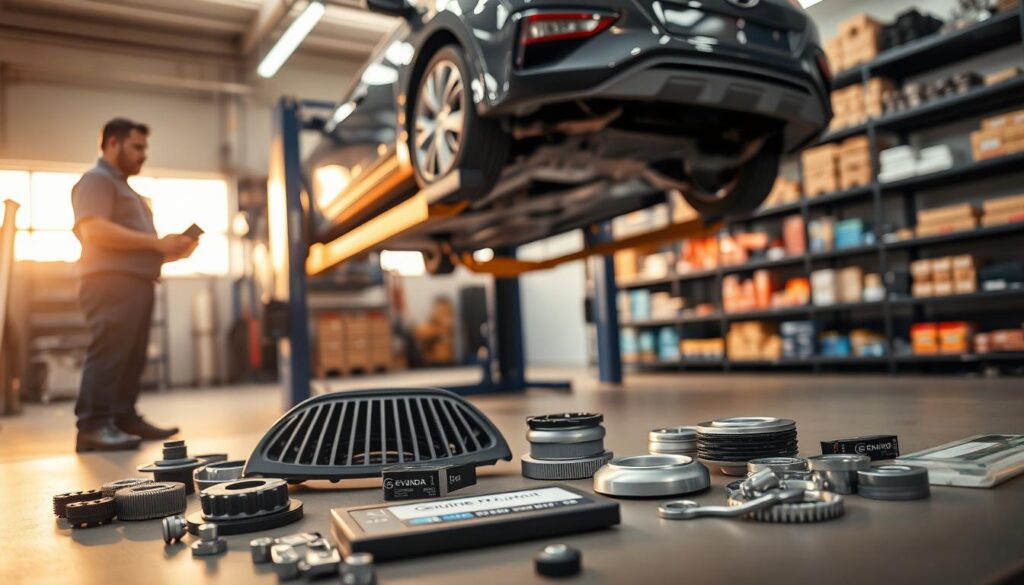
Choosing the right replacement parts is key to keeping your car running well. It’s a big decision between original parts and cheaper alternatives. The right choice keeps your car safe and reliable for years.
Cost Differences Explained
Genuine parts are made by the car’s manufacturer. They cost more but are designed perfectly for your car. Aftermarket parts, made by other companies, are cheaper but might not fit as well.
For more details, check out these auto body repair basics on OEM vs aftermarket parts. While saving money on aftermarket parts is tempting, think about the long-term costs. A cheaper part might need to be replaced more often, raising your hyundai upkeep pricing.
When to Choose Genuine Parts
For important parts like the engine and safety systems, go for genuine parts. They ensure your car works right and keep your warranty valid. Using OEM parts is a smart move for these critical areas.
For repairs that involve complex electronics or the car’s structure, genuine parts are the best choice. They offer peace of mind and ensure a perfect fit. This choice also protects your car’s value over time.
Pros and Cons of Aftermarket Options
Aftermarket parts offer many choices, including for older models. They can be a good option when you’re on a tight budget. Many brands make high-quality alternatives that match the originals.
But, the quality of aftermarket parts can vary. Always check the brand before buying to avoid low-quality materials. Finding the right balance helps manage your hyundai upkeep pricing without sacrificing your car’s performance.
Financing Maintenance Costs
Managing your car’s maintenance budget can make owning a car stress-free. Hyundai upkeep pricing is usually fair, but unexpected repairs can be costly. By exploring different payment options, you can keep your car in great shape without hurting your wallet.

Understanding Payment Plans
Many dealerships offer prepaid maintenance plans. These plans let you pay now or add the cost to your monthly car payment. Consistency is key for your car’s health, and these plans help you budget better.
Some service centers also have special credit lines for car repairs. These lines offer no interest if you pay back within a certain time. Always check the details before agreeing to any financing deal.
Budgeting for Regular Maintenance
Setting up a “sinking fund” for your car is a good idea. Saving a bit each month helps cover regular maintenance and unexpected repairs. This way, you avoid getting surprised by big bills at your next service visit.
“A budget is telling your money where to go instead of wondering where it went.”
Use of Extended Warranties
Extended warranties offer peace of mind, which is great for used car owners. They cost money upfront but can save you from expensive repairs. Think about your driving habits and the car’s history before deciding on an extended warranty.
| Financing Method | Best For | Key Benefit |
|---|---|---|
| Prepaid Plans | New Car Owners | Fixed costs for years |
| Sinking Fund | Budget-Conscious Drivers | No interest or debt |
| Extended Warranty | Used Car Owners | Major repair protection |
Managing your hyundai upkeep pricing is about picking the right method for you. Whether you save monthly or invest in a protection plan, staying organized keeps your car running well for years.
Tips for Reducing Maintenance Costs
Being proactive with your car’s care is key to saving money. Staying organized and informed helps manage hyundai service costs well. Small, consistent actions can prevent big repairs later.
Regular Cleaning and Care Tips
Keeping your car clean is more than looks; it’s essential for maintenance. Washing the outside and cleaning the undercarriage stops rust. This prevents expensive body repairs. Always check your fluids and tire pressure monthly for top performance.
Consistency is the key to longevity. Regular cleaning and monitoring basic parts catch issues early. This habit greatly reduces hyundai service costs over time.
Choosing the Right Mechanic
Finding a trustworthy mechanic is key to saving money. Look for shops with clear estimates and explain each service. If a shop suggests unnecessary upsells, ask for clarification or get a second opinion.
“The most expensive repair is the one you didn’t need to do in the first place. Always prioritize the manufacturer’s recommended service schedule over high-pressure sales tactics.”
Discounts and Loyalty Programs
Many shops offer loyalty programs for regular customers. Sign up for newsletters or check service websites for coupons. These discounts can save a lot of money over the year.
| Strategy | Potential Savings | Effort Level |
|---|---|---|
| DIY Fluid Checks | Low | Minimal |
| Loyalty Programs | Medium | Low |
| Preventative Cleaning | High | Moderate |
| Comparing Quotes | High | Moderate |
Using these strategies keeps your finances in check while keeping your car reliable. Being an informed owner helps avoid unnecessary expenses. Stay diligent, and your car will serve you well for years.
Conclusion: Planning for Financial Wellness with Hyundai
Managing your vehicle is more than just buying it. It’s about thinking ahead and keeping it in good shape. This way, you avoid big repair costs and keep your finances healthy.
Strategic Financial Planning
Smart owners plan their car budget carefully. They save for insurance, registration, and repairs. This helps keep monthly payments low and avoids financial stress.
By keeping payments under 20% of your income, you can handle car costs easily. This makes budgeting for a new car a breeze.
Commitment to Routine Care
Regular maintenance is key to keeping your car in top shape. Treat each oil change and tire rotation as an investment. It’s essential for your car’s performance and value.
By addressing small issues early, you avoid big, costly repairs. This keeps your car running smoothly and saves you money.
Refining Your Ownership Experience
Being a car owner is a big deal. It requires staying informed and proactive. Tracking service costs and regular inspections keep your car reliable.
Your commitment to care today means a better driving experience tomorrow. It’s all about making smart choices now for a smoother future.
FAQ
Is the hyundai maintenance cost higher than competitors like Toyota or Honda?
Hyundai’s annual maintenance cost is competitive and often lower than Toyota or Honda. The three years of complimentary maintenance for new vehicles also helps keep costs down.
What are the typical hyundai service expenses after the complimentary period ends?
After the initial three years, owners typically spend 0 to 0 annually on maintenance. This covers routine services like oil changes and brake inspections.
How can I lower my hyundai maintenance fees?
Look for service coupons on dealership websites and do simple tasks like cabin air filter replacements yourself. These steps can significantly reduce maintenance costs.
Does hyundai upkeep pricing vary significantly for SUVs?
Yes, SUVs like the Palisade have higher upkeep costs due to more oil, larger tires, and complex All-Wheel Drive systems.
Are hyundai service costs higher for turbocharged engines?
Turbocharged models, like those in the N Line series, have slightly higher service costs. They require more frequent oil changes and specific spark plugs.
Why do hyundai maintenance prices change based on location?
Maintenance prices vary by location due to labor rates. Technicians in big cities have higher costs than those in rural areas, affecting your bill.
What is the estimated 10-year hyundai maintenance expenditure?
The total maintenance cost over 10 years is about ,000 to ,000. This is lower than many European luxury brands.
Do independent shops charge fewer hyundai service charges than dealerships?
Yes, independent mechanics often have lower labor rates. This results in lower costs for out-of-warranty repairs like water pump or alternator replacements.

Hi! I’m Moheen Iftikhar, founder of CarPulsei. Passionate about cars, innovation, and the future of mobility, I create content that keeps automotive enthusiasts informed. From expert reviews and industry trends to driving tips and practical insights — my goal is to help you navigate the automotive world with confidence.